

The Berkshire Conference of Women Historians invites current members to participate in the 2026 election of Officers and Trustees. All current members will receive a secure ballot via email when voting opens.
All candidates on the 2026 ballot are running unopposed. Elected Officers will serve two-year terms, while elected Trustees will serve three-year terms. We encourage members to review the candidate statements below to learn more about each candidate’s experience, priorities, and commitment to advancing the mission of the Berks.
Voting Window
All current members will receive a secure ballot via email when voting opens.
President
Provides strategic leadership and oversight for the Berkshire Conference of Women Historians and presides over meetings of the Executive Committee and Board of Trustees. The President also leads planning for the Big Berks, including shaping the conference theme and appointing program leadership.
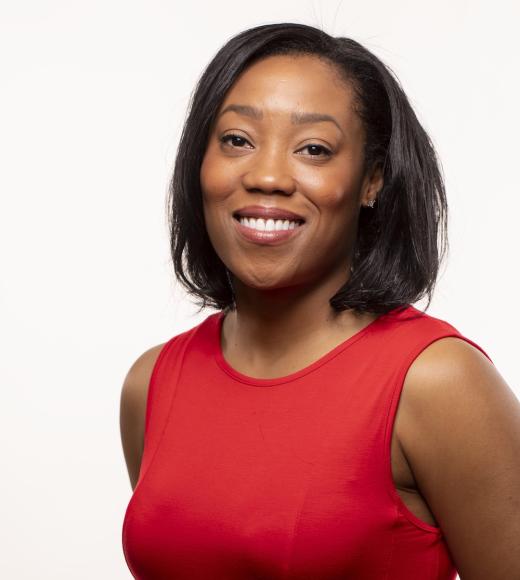
Traci Parker
Associate Professor of History, University of California, Davis
Over the past several years, I have had the privilege of serving the Berkshire Conference of Women Historians as Treasurer (2020–2023), Vice President (2023–2025), and, now, Acting President (2025–present). During this period, the Berks has undergone significant transitions and institutional development, and I have worked collaboratively with trustees, officers, and our executive director. Together, we have focused on improving the organization’s governance structures and leadership stability, increasing transparency, updating our mission and vision statements and bylaws, reimagining our conference model and membership engagement, and advancing a long-term strategic plan to ensure the organization’s sustainability and accessibility for future generations of historians. We have refreshed the organization by launching a new website, expanding our social media presence to be more dynamic, and adding more online programming. We have also strengthened our connections with our peer organizations, including the American Historical Association, the National Women’s Studies Association, and the Western Association for Women Historians.
As a scholar specializing in African American and women’s history, I am dedicated to the organization’s mission to diversify our community, promote intersectional, social justice-focused research, and ensure that the Berks remains a vibrant and welcoming home for historians of women, gender, and sexuality, as well as for women historians across all fields. If elected, I hope to continue advancing initiatives that expand accessibility and participation; strengthen mentorship opportunities for graduate students and contingent faculty; support innovative scholarship; strengthen the organization’s long-term financial stability by launching a new capital campaign; increase our public engagement; and continue working to safeguard our profession and its members against increasing political and structural challenges.
President-Elect
Supports the President while preparing to assume the presidency and participates in the organization’s broader leadership and governance. The President-Elect also oversees the Berks’ capital campaign, helping to advance long-term fundraising and financial sustainability.
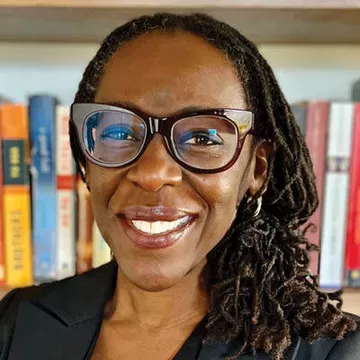
Rachel Jean-Baptiste
Michelle Mercer and Bruce Golden Family Professor in Feminist and Gender Studies; Department of History and Department of African and African American Studies, Stanford University
Aligned with the Berks mission, my professional trajectory has entailed a commitment to shared empowerment, narrating complexity, and producing knowledge about the past to make for better futures. My research explores how concepts such as “sexuality,” and “gender” have been thought about, experienced, and contested across time and space. I began my career as a historian of marriage, sexuality, and the law in Equatorial Africa. Following the roots and routes of men and women’s intimate lives in francophone Africa led me to expand my work to multiple countries in West Africa and Europe, examining how ideas about race, gender, and colonialism shaped citizenship. I am currently investigating the history of urban life, family, and civics in Haitian history. I’ve published books in English (forthcoming in French); authored articles in venues including Journal of Women’s History and History of Sexuality and Gender and History; and presented my work in Europe, Africa, Asia, and the Americas.
I’ve also pursued collective work with scholars, secondary school teachers, and community organizations. When I attended my first Berks conference as a graduate student, I experienced both inclusion and exclusion but also met mentors who championed me. I have endeavored to follow their leadership model of opening up doors of access and success for others. In serving on the boards of associations such as the French Historical Studies and the African Studies Association, I have worked to sustain the financial, intellectual, and advocacy capacities of scholarly organizations. In co-organizing colloquia – in locations ranging from Bonn, Germany to Dakar, Senegal with PI’s from all over the world – we published the work of graduate students, new and contingent PhD’s, and established researchers. As co-president of the Coordinating Council for Women in History during Covid, I worked with the board to secure grant funding, organize webinars and distribute funds to members of varied career paths to maintain professional advancement.
In seeking election as president-elect, I wish to cultivate a culture in which the Berks conference is a site of belonging, for innovative historical thinking and doing, worldwide perspectives, ethical conversation, and transformative knowledge production and dissemination.
Vice President
Assumes the duties and powers of the President when the President is absent or unable to serve and carries out additional responsibilities assigned by the President, Board of Trustees, or Executive Committee. The Vice President also oversees planning and coordination for the Little Berks.
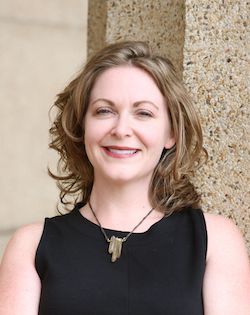
Audra Jennings
Chair and Professor of History, Western Kentucky University
Audra Jennings is Department Chair and Professor of History at Western Kentucky University (WKU), where she teaches historical methods, modern United States history, and the history of disability and medicine. She currently serves as Treasurer of the Berkshire Conference of Women Historians and has served three terms as Secretary of the Disability History Association, chaired the OAH Committee on Disability and Disability History, and served on various committees for the Berkshire Conference of Women Historians, the Disability History Association, and the Coordinating Council for Women in History. With Leisa Meyer, she co-authored and served as co-director of a Berkshire Conference of Women Historians grant project, funded by the AHA’s NEH-funded Grants to Sustain and Advance the Work of Historical Organizations. Through this grant, the Berks piloted student chapters of the organization, examining how these chapters could support efforts to recruit and retain women of all races and ethnicities and students of color of all genders. As Vice President, she hopes to expand the program piloted with AHA-NEH support to help cultivate the next generation of women historians and scholars of women, genders, and sexuality. Additionally, as Treasurer, she helped to organize the 2024 Little Berks in Bowling Green, Kentucky at her institution.
Jennings is the author of Out of the Horrors of War: Disability Politics in World War II America (University of Pennsylvania Press, 2016). She is currently writing a book, Insecurity: Disability, the Great Depression, and the New Deal State, that examines disability during the New Deal. The project has been funded by the National Science Foundation, American Council of Learned Societies, the Harry S. Truman Library Institute, and the Roosevelt Institute. She has written articles on gender, sexuality, and disability; health and safety in the U.S. labor movement; and veterans’ health and disabled veterans’ activism in the mid-twentieth century. Jennings aims to bring her grant-writing and fundraising experience to her continued work with the Berks to help expand the organization’s new initiatives, support the organization’s strategic plan, and create long-term stability for the organization.
Secretary
Maintains minutes of Annual Meetings and Executive Committee meetings, supports required communications with the membership, and performs other responsibilities associated with the office or assigned by the Executive Committee. The Secretary may also assume presidential duties if both the President and Vice President are unable or unwilling to serve.
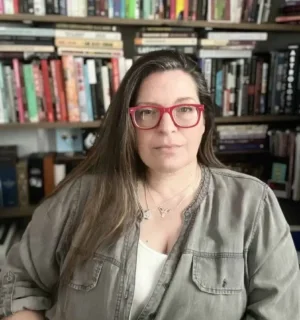
Karla Strand
Women’s and Gender Studies Librarian, University of Wisconsin
Karla J. Strand holds a bachelor’s in history from Carroll College (Wisconsin), with emphases in women’s studies and the US Civil War. She has a master’s in library and information science from University of Wisconsin-Milwaukee and a doctorate in information science from the University of Pretoria (South Africa).
An academic librarian for over twenty years, Strand is currently the Gender and Women’s Studies (GWS) Librarian for the University of Wisconsin. In this capacity, she supports research, scholarship, and teaching in GWS, LGBTQ+ Studies, and women’s history, and coordinates the Wisconsin Women Making History project, a bibliography series, open access resources, and more.
Strand is currently writing a brief history of the GWS Librarian position as the office celebrates its 50th anniversary in 2027. More generally, her historical research focuses on white women’s active roles in racism and the attempted genocide of Indigenous peoples. Her latest publication explores white women’s involvement in Native American boarding schools.
Strand also specializes in Wisconsin women’s history. In 2019, she served as the Wisconsin coordinator of the Online Biographical Dictionary of the Woman Suffrage Movement in the US and was named to the executive committee of Wisconsin Gov. Tony Evers’ 19th Amendment Suffrage Centennial Committee. She was previously the book reviews editor and a member of the board for the Coordinating Council for Women in History.
Strand is a freelance writer contributing two regular columns to Ms. magazine and is a member of the Ms. Committee of Scholars. She is dedicated to community education for individual and collective liberation.
Treasurer
Oversees the Berks’ funds and financial assets, including the receipt, deposit, and stewardship of organizational monies. The Treasurer oversees the financial work of the Executive Director and supports responsible financial management, reporting, and accountability.
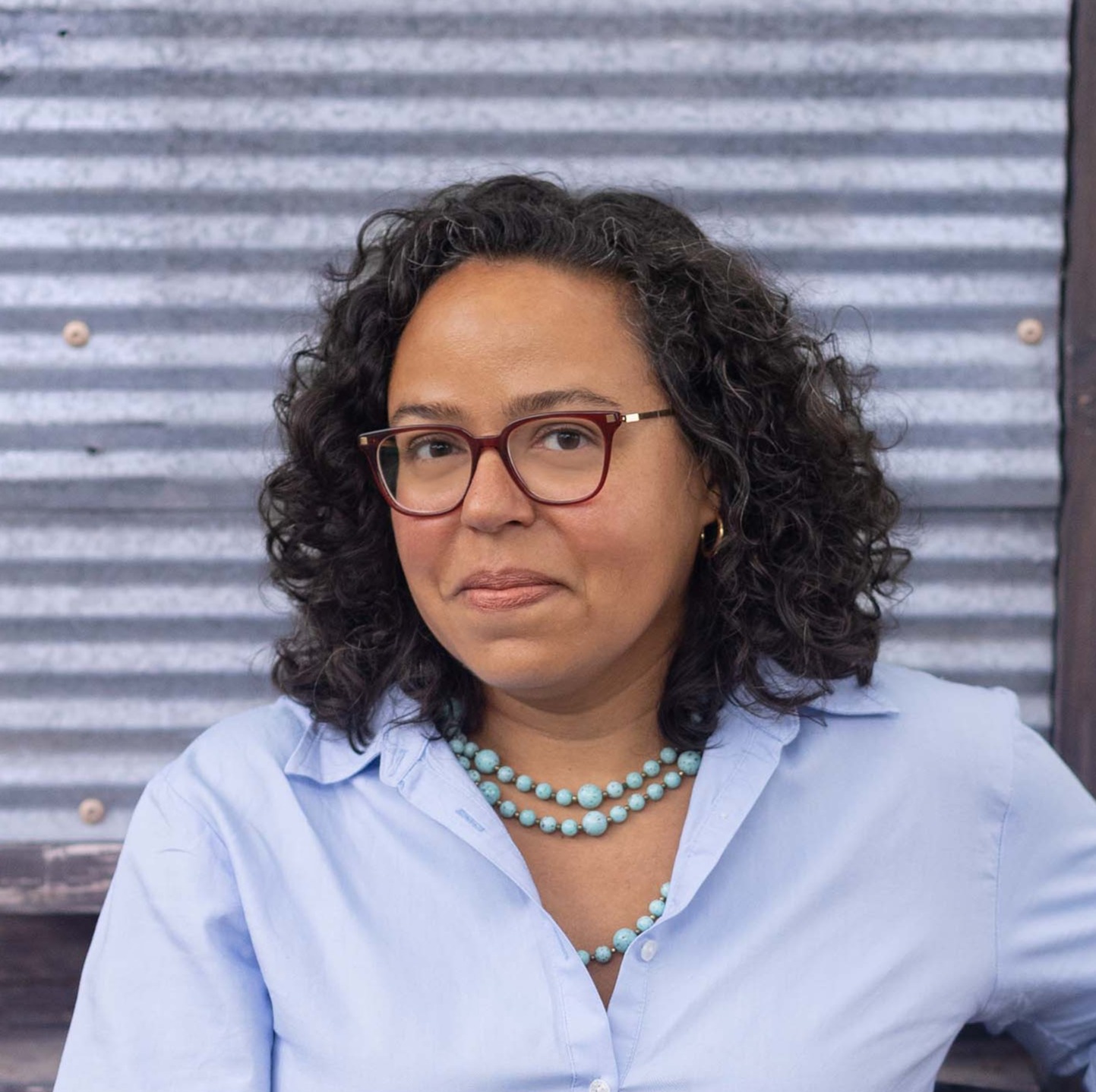
Marie Grace Brown
Hall Professor of British History, University of Kansas
This summer I will conclude six years in a department leadership position at the University of Kansas, first as Director of Undergraduate Studies and then as Associate Chair. During those years, I contended with the Covid-19 pandemic; a steady decline in our majors; rapid turnover in university leadership; and drastic budget cuts. From this, I have developed a leadership philosophy in which I respond to challenges with creative risk-taking. For example, my institution offers limited resources for undergraduate research. To address this, I conceived of, and implemented, a self-renewing fund which provides small stipends to undergraduate students carrying out historical research. In direct contradiction to the advice from our endowment office, this initiative is funded almost entirely from microdonations—$20.26 was the suggested donation amount for this year. I will bring that same willingness to think creatively and expansively to the position of Treasurer.
I have not always felt as if I belonged at the Berks, either intellectually or socially. As one of the Program Chairs for the 2027 Big Berks Conference, I am already working to secure programming assistance from scholars with a global range of expertise, across multiple time periods. Many have never been connected with the Berkshire Conference before; others are returning after years away. Today, the Berkshire Conference seeks to repair and rebuild. To do so, we must imagine new ways to maintain and grow our community. Travel to conferences is increasingly precarious or financially difficult for a significant portion of our membership: trans scholars, scholars of color, and scholars from institutions with limited funding. In response, the Berkshire Conference must devote our energies and financial resources to developing additional forums for 1) advancing the scholarship of women, genders, and sexualities and 2) sustaining and enriching our members. As Treasurer, I would advocate that we approach the upcoming capital campaign not simply as a project to raise funds, but as a concentrated effort to deepen, renew, or jumpstart our members’ intellectual and personal connections with the organization.
Trustee
Serves on the Board of Trustees, which oversees the Berks’ business, property, and affairs and exercises the organization’s governing authority. Trustees participate in major organizational decisions and provide fiduciary, strategic, and institutional oversight.
Leisa Meyer
Professor of American Studies, History, and Gender, Sexuality and Women’s Studies, William & Mary
Rachel Feinmark
Senior Research Associate, Metropolitan Museum of Art
Febe Pamonag
Professor of History, Western Illinois University