Our Mission
We are a diverse and international community of scholars committed to advancing intersectional, justice-driven research. We are committed to illuminating the histories of women, genders, and sexualities while embracing the full breadth of historical scholarship that seeks to deepen and expand our collective understanding of the past. We are dedicated to the dissemination and promotion of this work across academic and public arenas, and the professional development of scholars in these fields. Through collaboration and mentorship, we work to transform historical knowledge, strengthen the discipline, and improve the conditions under which scholarship is produced, taught, and shared.
Our Vision
We envision fostering a global feminist historical community where those who study the past—across specialities, identities, and geographies—are valued, where equity is foundational, and where scholarship on women, genders, and sexualities realizes its full transformative potential. Grounded in a spirit of fellowship and mutual support, we honor the past while empowering future generations of feminist historians and cultivating a more just and inclusive landscape for scholars and their work worldwide.
Our Governance Structure
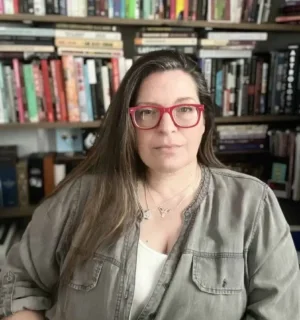
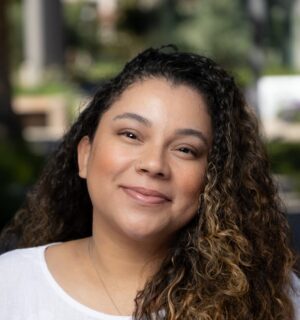
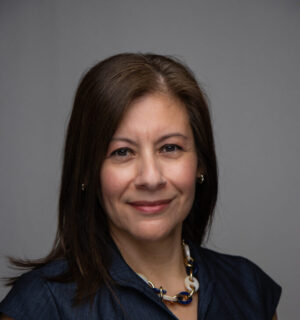
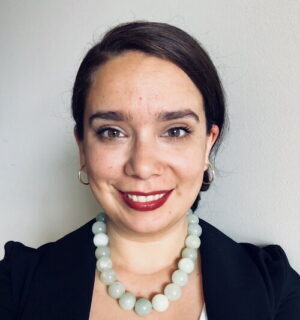
The governing structure of the Berkshire Conference of Women Historians centers on a unified board that integrates both executive leadership and fiduciary oversight. The Executive Board—composed of the officer roles of President, President-elect, Vice President, and Treasurer, together with the Executive Director—provides day-to-day governance and strategic direction, while the full board encompasses both the Executive Board and the Trustees, ensuring continuity between operational decision-making and long-term stewardship. The Trustees collectively oversee the organization’s financial health, institutional memory, and sustainability, with the Executive Director also serving as Chair of the Trustees. Supporting this structure, the Nominating Committee plays a key role during each election cycle by reviewing nominations, cultivating a diverse and representative slate of candidates, and presenting its recommendations to the Trustees for approval.
Under this model, the Berkshire Conference of Women Historians elects a President through a four-year leadership cycle. The individual first serves a two-year term as President-elect, working closely with the sitting President and Executive Board to ensure continuity, develop strategic priorities, and prepare for leadership. This is followed by a two-year term as President. During the presidential term, the President’s primary responsibility is organizing and overseeing the biennial Berkshire Conference on the History of Women, Genders and Sexualities (Big Berks), guiding its intellectual vision, coordinating planning efforts, and ensuring the successful execution of the organization’s flagship event.
The Vice President is responsible for steering the Little Berks, its communication with the membership and its committees.
Major initiatives that are consistent with the Bylaws are proposed by, or to, the Executive Committee, which acts on them, sometimes in consultation with the full membership. If adopted, initiatives are referred to the appropriate committee, or assigned to an ad hoc committee established specifically to move the project forward. Terms of office are normally two-three years.

Our History and Commitments
The Berkshire Conference of Women Historians is a non-profit organization incorporated in the State of Maryland. It exists solely for the promotion of scholarship and to support the activities of women in the historical profession. All contributors receive an official tax receipt issued by the Treasurer as part of our tax exempt, non-profit IRS designation as a 501c3 organization.
The Berkshire Conference of Women Historians was founded in 1930 to promote the interests of women historians within and outside academia. In recent decades, the organization has taken a leading role in promoting the history of women, gender and sexuality. But members, and those who attend the biennial conference, need not specialize in the history of women, gender or sexuality, to find that the organization provides colleagueship and professional support.
The Berkshire Conference created its first constitutions in the 1950s. In 1981, we incorporated as a 501(3) c, allowing us to accept tax-deductible donations and create an endowment. Although our primary membership is in North America, we have members from around the globe and are a hub for international networking. We also promote the visibility and careers of women scholars by giving five annual awards: two first book prizes; two article prizes, and a graduate student fellowship awarded jointly with the Coordinating Council on Women’s History (CCWH).
Our biennial conference (the Berkshire Conference on the History of Women, Genders and Sexualities, or “Big Berks”) is the largest women’s history event in the world. The organization also runs an annual meeting (the “Little Berks”), which draws between 50 and 60 members for a weekend of socializing, networking, and scholarship. Both the Big and Little Berks have traditionally served as venues for networking, friendship, and intellectual connection across generations.